Liquid Pentrant Test
LPT is a non destructive test method based on capillary action which does not harm the samples or parts being inspected.
planning & strategy
Liquid penetrant inspection can only be used to inspect for flaws that break the surface of the sample
- Fatigue cracks
- quench cracks
- grinding cracks
- overload and
impact fractures - porosity
- laps
- seams,
- pin holes in welds
LPT method used on lots of machined parts, as well as weld joints, manufactured product, casting, forging etc.
LPT method can be used successfully on non porous & fairly smooth material such as glass, metal, plastic and fired ceramics.
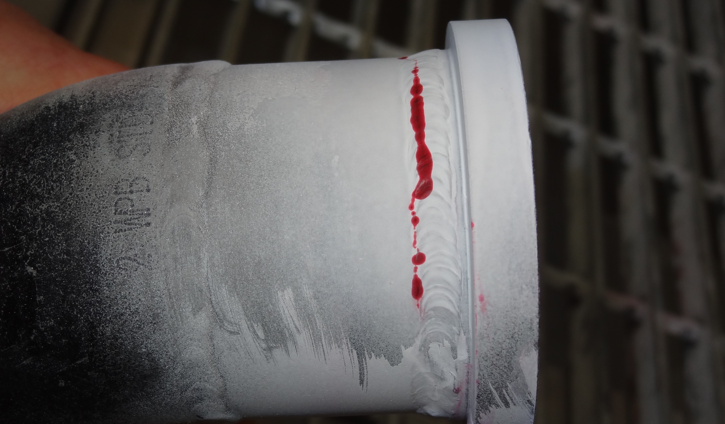
The penetrant comes in a two types of liquid visible dye (coloured red) and fluorescent dye ( coloured green-yellow)
Liquid penetrant inspection is a relatively easy and, inexpensive means of surface inspection & complicated areas are inspected
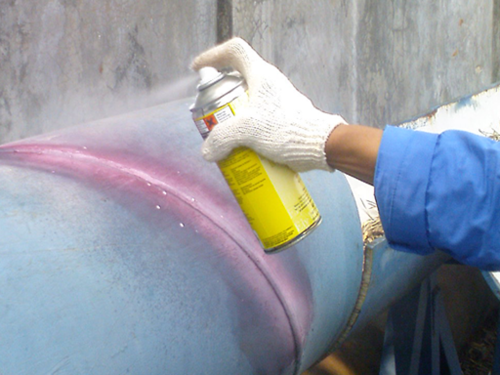
Test based upon capillary action where low surface tension fluid penetrates into clean and dry surface breaking discontinuous penetrant may be applied to the test component by dipping, spraying or brushing, after adequate penetration time has been allowed, the excess penetrant is removed and developer is applied. the developer helps to draw penetrant out of the flaw so that an invisible indication become visible to the inspector.